

How Generative AI Is Transforming Healthcare
July 30, 2026
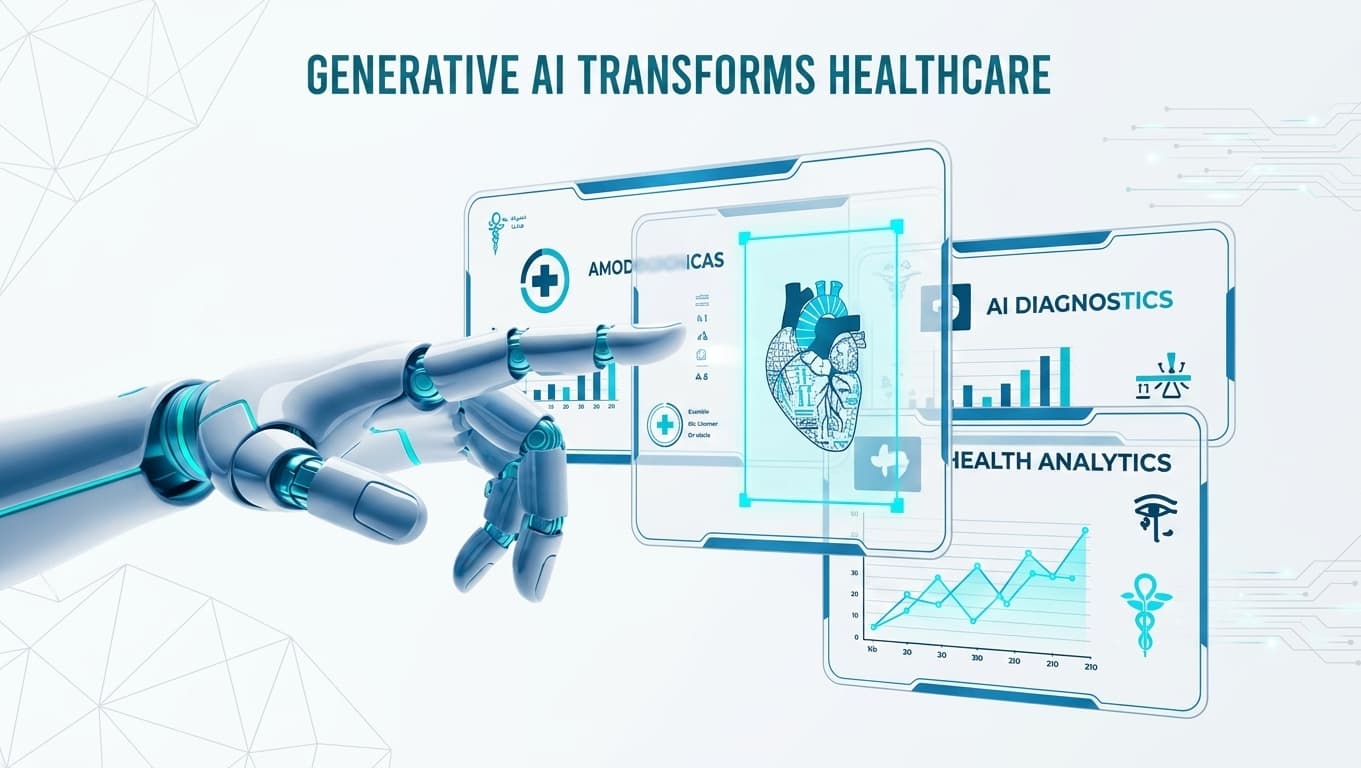
Healthcare has more administrative and diagnostic workload than any care team can comfortably carry. Generative AI isn't replacing clinical judgment it's clearing away the paperwork and pattern-matching that eats into the time clinicians have for actual patients.
Cutting Down Administrative Work for Clinicians
Clinical documentation, visit summaries, and routine correspondence take up a disproportionate share of a clinician's day. Generative AI that drafts these accurately, for a human to review and approve, gives that time back.
Faster, More Consistent Diagnostic Support
AI models trained on medical imaging and patient data can flag patterns for a specialist to review faster than manual analysis alone a second set of eyes that never gets tired, always deferring to the clinician's final call.
Personalized Patient Communication at Scale
Generative AI can turn dense clinical information into clear, personalized explanations for patients improving understanding and adherence without adding to a care team's workload.
Where Human Judgment Still Has to Lead
None of this replaces a clinician's judgment, and it shouldn't try to. The systems that succeed in healthcare are built to support a human decision-maker, not to make the decision for them.
The Trust and Privacy Questions That Come First
Healthcare AI lives or dies on trust. Patient data handling, model transparency, and clear accountability for AI-assisted decisions have to be solved before a system ever touches a real patient interaction.
In this article